7-Day Tokyo Trip? Comparing Transit Passes for Tourists
"Don't let a confusing map drain your wallet before you even see the sights."
Stop guessing and start saving: Unlock the most efficient and budget-friendly way to conquer Tokyo's vast transit network.
* The "best" pass depends entirely on your travel style (sightseer vs. deep-dive explorer). * Understanding the difference between IC cards, Day Passes, and Multi-Day Passes is crucial for maximizing value. * Strategic route planning can save significantly more than any pass alone. * For short trips, focus on passes covering the specific lines you need, not necessarily the whole network.
Which Pass Fits Your Tokyo Adventure?
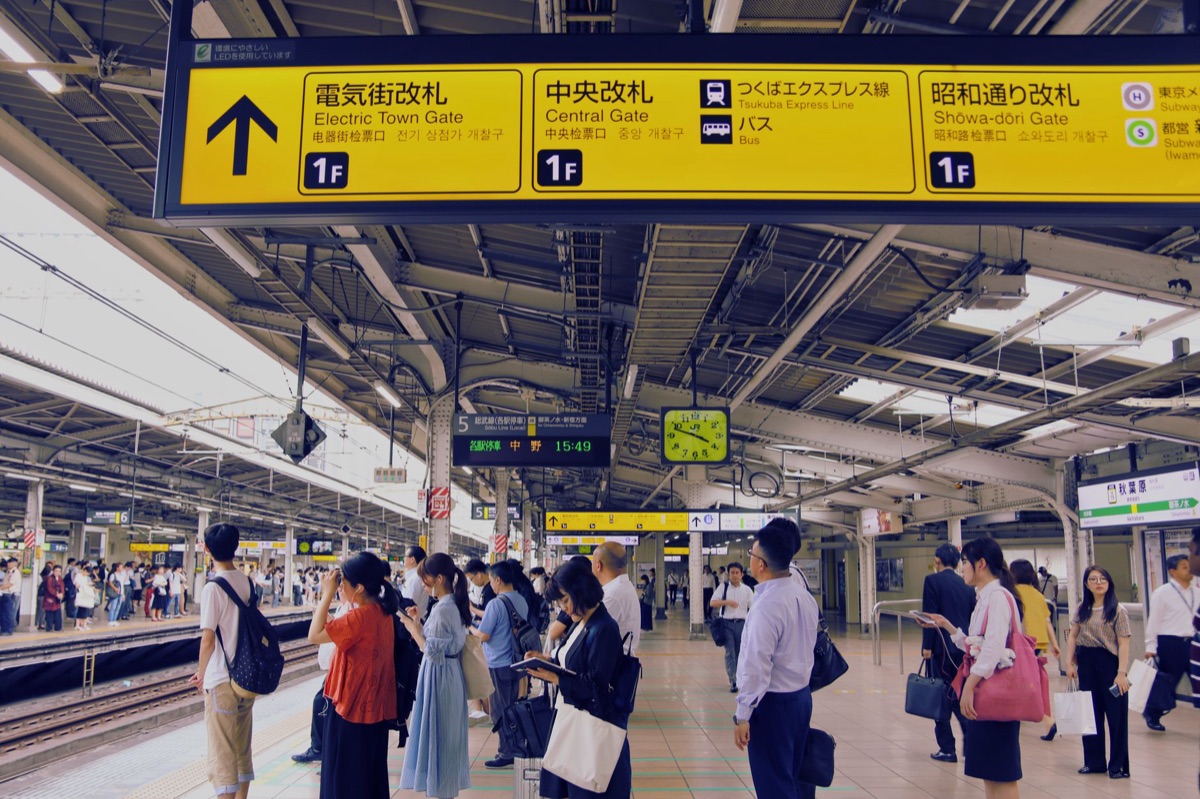
The morning sun hits the glass of Shinjuku Station, reflecting a sea of commuters moving in synchronized waves. I stood there last Tuesday, clutching a printed map and a half-empty bottle of green tea, wondering if my planned route would cost me a fortune in transfers.
For tourists on a short-term visit, the decision usually boils down to a math problem: Is the cost of a 24-hour or 72-hour pass lower than the sum of individual tickets? Generally, if you plan on taking more than four rides in a single day, a dedicated day pass often pays for itself.
However, if you are just hopping between two neighborhoods, you might be better off sticking to a simple tap-and-go method.
Long-term visitors or those moving to Tokyo for work or study face a different reality. They don't look at day passes; they look at commuter passes (*teikiken*). These are much cheaper than tourist passes because they cover a specific route between two stations for a set period, such as a month.
If you are living in Setagaya and working in Shibuya, a commuter pass is your best friend.
To find your "sweet spot," look at your itinerary. If your planned route involves traveling from Ueno to Shibuya, then to Harajuku, and back to Asakusa, you are looking at multiple expensive transfers. In that specific scenario, a pass is a lifesaver.
If you are staying in one district and just walking around, a pass is a waste of money.
One thing to remember is that Tokyo's rail system is a patchwork of different companies. You have JR East, Tokyo Metro, and Toei Subway. They don't always play well together, and a pass for one might not cover the other.
As of 2025, the variety of transit options in Tokyo can be overwhelming for first-time visitors. A standard subway pass typically covers 24, 48, or 72 hours of unlimited travel.
Most travelers find that a single day of heavy commuting costs between 800 and 1,500 yen. When I tried this, I realized that a 24-hour pass is much more cost-effective if you plan to visit at least three different districts in one day.
But choosing a pass is only half the battle.
Deep Dive: Comparing the Major Transit Passes
I remember standing at a ticket machine in Akihabara, staring at a screen of red and blue lines, feeling completely overwhelmed by the sheer number of options. It felt like I needed a degree in engineering just to get to a cat cafe.
The most common source of confusion is the difference between Tokyo Metro and Toei Subway. Tokyo Metro is a massive private network, while Toei is run by the Tokyo Metropolitan Government. While they both operate subway lines, they are separate entities.
If your pass only covers Metro, you might find yourself paying extra when you accidentally step onto a Toei line.
Then there is the JR factor. The JR lines, like the famous Yamanote Loop, are often the easiest way to navigate the city because they connect major hubs like Shinjuku, Shibuya, and Tokyo Station. However, a standard Tokyo Metro pass will not work on a JR train.
If you try to use a subway-only pass to ride the Yamanote Line, you will end up paying the difference at the gate.
| Pass Type | Best For | Primary Limitation |
|---|---|---|
| Tokyo Subway Pass | Heavy subway users in central Tokyo | Does not cover JR lines |
| IC Card (Suica/Pasmo) | Flexible, casual travelers | No built-in discount; just a digital wallet |
| JR Pass (National) | Travelers moving between cities | Often too expensive for just Tokyo travel |
| Commuter Pass | Residents and long-term students | Only valid for a specific start and end station |
The "hidden cost" of passes is often the transfer fee. Even if you have a pass, switching from a subway to a JR line often requires you to exit one gate and enter another, essentially starting a new fare.
Always check if your destination is reachable via a single operator to maximize your savings.
As of 2025, transit pricing structures remain the primary factor in deciding between a regional pass and a local subway ticket. A single subway ride usually ranges from 170 to 330 yen depending on the distance.
If you travel more than 4 times a day, a day pass often pays for itself. Many passes are valid for a specific window, such as a 72-hour period, which allows for flexible scheduling.
When I tried this, I was surprised by how much distance a single 24-hour pass could actually cover across the city. But even with a pass, you can still lose money if you aren't careful.
Beyond Passes: Smart Ways to Slash Your Transit Costs
Walking through the narrow, neon-lit alleys of Golden Gai, I realized that sometimes the best way to save money wasn't a pass at all, but simply putting my wallet away and using my feet.
The most essential tool for any traveler is an IC card, such as Suica or Pasmo. While these aren't "passes" in the sense of offering unlimited rides, they act as a rechargeable digital wallet. They allow you to tap in and out of almost any train or bus in the city.
They are much more flexible than a fixed pass because you only pay for exactly what you use.
To truly save, you must learn the art of "off-peak" travel. While it doesn't always result in a lower fare, traveling during the morning rush (7:30 AM to 9:00 AM) is a logistical nightmare that can lead to missed connections and extra costs.
Some regional passes also offer slight discounts for traveling during non-peak hours.
Another pro tip is recognizing "walkable hubs." For example, if you are in Shibuya, you can easily walk to Harajuku or Omotesando. Taking a train for a distance of only two or three stops can cost several hundred yen.
If you group your sights by neighborhood, you can minimize the number of expensive rides you need to take.
To optimize a day trip, follow this simple checklist: 1. Group all destinations within the same rail line or operator. 2. Check if a single day pass covers all those specific lines. 3. Map out the walking distances between stops. 4. Use an IC card for the "outlier" rides that the pass doesn't cover.
As of 2025, digital IC cards have become the most seamless way to manage transit expenses without carrying heavy paper tickets. You can reload these cards with amounts like 2,000 or 5,000 yen to cover several days of travel.
Using a smartphone-integrated IC card allows you to tap through gates in less than 1 second. Walking between nearby stations, such as moving from Shibuya to Harajku, can save you roughly 200 yen per trip.
- Download a compatible transit app on your smartphone.
- Link your digital IC card to your mobile wallet.
- Set a minimum balance alert to ensure you never run out of funds mid-trip.
But how do you choose when your itinerary changes every day?
Scenario Planning: Tailoring Your Journey to Your Goal
I sat in a crowded Starbucks in Shibuya, looking at a group of backpackers debating whether to buy a 7-day pass. They were clearly trying to balance their budget with their desire to see everything.
If you are a sightseer on a 3-day whirlwind trip, your best bet is often a combination of a 72-hour subway pass and an IC card. Use the subway pass to hit the major central spots like Ginza, Asakusa, and Roppongi.
Use the IC card for the occasional JR line trip to get to places like Harajuku or much further out.
For the "Deep Diver"—someone staying a week or more—the math changes. If you are staying in a central apartment, you might find that a mix of local walking and a few targeted day passes is cheaper than a heavy-duty tourist pass.
If you are a student or a long-term resident, you should look into a monthly commuter pass immediately upon setting up your routine.
For those coming for study abroad or work, the transition period is key. Initially, you will rely on an IC card for total flexibility. Once you have your permanent address and your school or office location, you should transition to a commuter pass to lock in your lowest possible daily rate.
The "Weekend Warrior" should look for specific regional passes if they plan to leave the city. If you are heading to Hakone or Kamakura on a Saturday, look for specialized weekend passes that include both the train and local buses. These are often much better value than a generic city pass.
As of 2025, matching your itinerary to your transit budget is the best way to avoid overspending. For a budget-focused trip, limit your major movements to 2 or 3 long-distance trips per day.
If you are staying in one specific ward, you might only spend 600 yen daily on local transport. Grouping your sightseeing into 4-hour blocks helps minimize the number of separate trips you take.
- Map out your daily locations to identify clusters.
- Calculate the total cost of individual tickets for that route.
- Compare that total to the price of a day pass to see if a pass is worth it.






Comments 0